Getting Started with Bachata — A Beginner's First Steps
Learn the basic timing, footwork, and frame. We cover what to expect in your first class and how bachata differs from other partner dances.
Discover beginner-friendly salsa classes available in Liepāja. We break down the basic patterns, timing, and what makes salsa different from bachata.

Salsa isn't bachata. That's the first thing you'll notice when you step into a class here in Liepāja. The rhythm's faster — it's built on a quick-quick-slow pattern rather than the smooth, romantic timing you might've heard about. You're looking at around 92-108 beats per minute, which means your feet are moving constantly. But here's the thing: it's not complicated, it's just different.
The basic step is what we call a "forward-back" motion. You'll step forward on beat one, rock back on beats two and three, then replace your weight forward on beat five. Sounds like a lot? It's really just three steps per side, repeated. Once that clicks — and it will — everything else builds from there.
Learning the basic step is where everything starts. We teach it in three parts so you're not overwhelmed. First, you'll get comfortable with just the footwork — no arm movement, no style, just feet.
Step forward with your left foot on beat one. Step back with your right on beat two. Replace weight on your left on beat three. That's your forward motion.
Pause on beat four. Your weight's on your left foot. You're setting up for the return motion. Most people count this as "1-2-3, pause."
Step back with your right foot on beat five. Replace weight on your left on beat six. Step back again on beat seven. You're moving back, but your upper body stays forward — that creates the contrast.
After beat eight, the pattern repeats. Your partner does the exact opposite — they start back while you start forward. That's what makes the lead-and-follow connection work.
This article is educational information about salsa fundamentals and doesn't replace actual instruction from qualified teachers. Everyone learns at different speeds — some people get the basic step in one session, others need three or four. That's completely normal. Our instructors in Liepāja adjust to your pace, not the other way around. If you're interested in classes, reach out to confirm current schedules and availability.
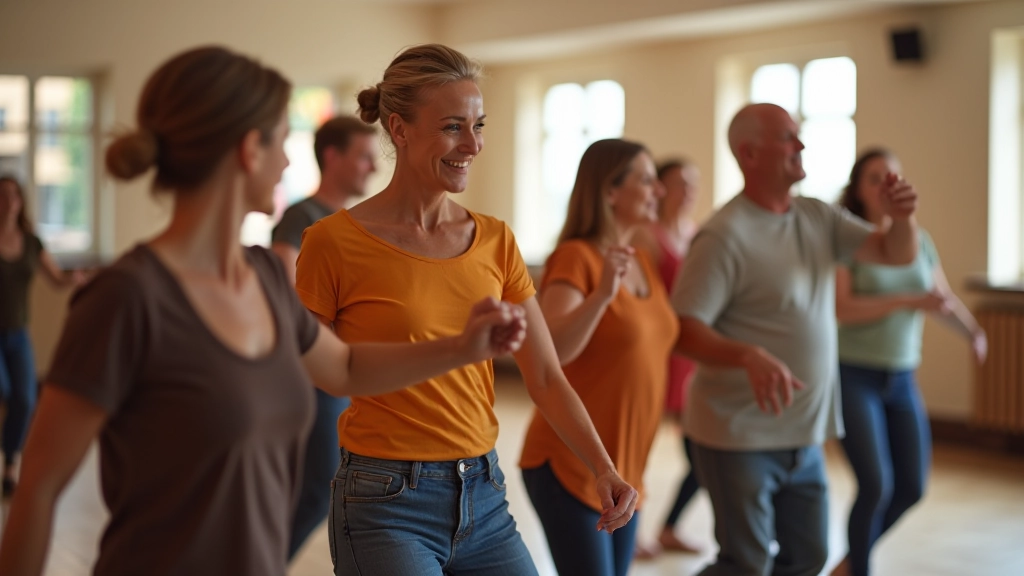
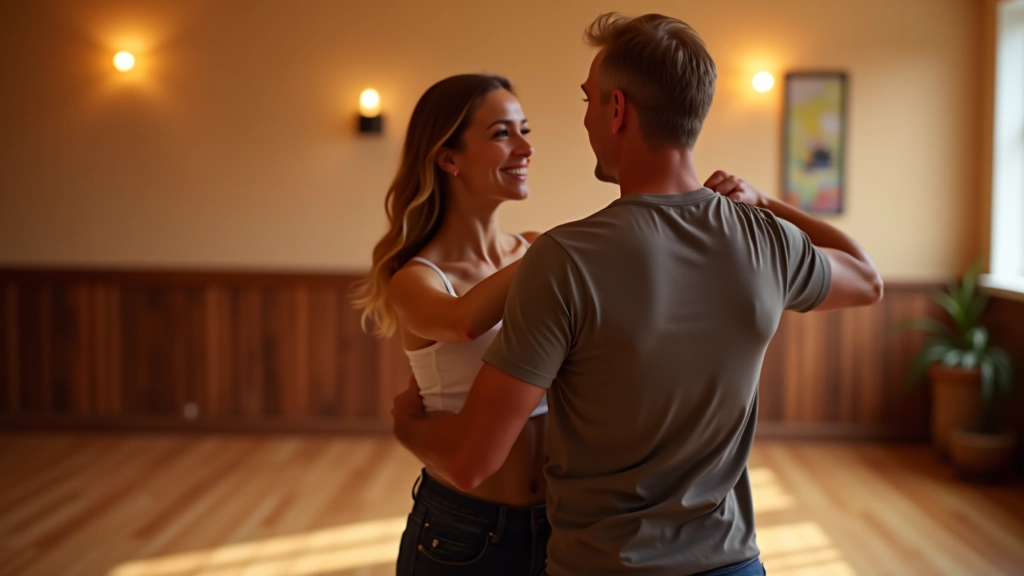
Here's where salsa gets interesting. Unlike bachata, where you're pressed together and moving as one unit, salsa has space between you and your partner. You're maybe 12-18 inches apart, depending on the style. The lead — usually the person stepping forward — communicates through pressure in the hands and a firm frame.
The follow watches your upper body and feels your hand pressure. It's not guessing. A good lead will tell you exactly where you're going through their frame — forward, backward, or into a turn. As a beginner, you're not doing complicated turns yet. You're learning to feel the direction and move with it. Most beginners need about 4-6 weeks of consistent practice before they're comfortable following without thinking about their feet.
Don't worry about getting it perfect. Classes here pair people up regularly so you're dancing with different partners. That teaches you to adapt, which is exactly what you need.
You'll walk in, and the first thing you'll notice is the energy. Salsa classes have a completely different vibe than a lot of other activities. There's music playing, people are laughing, and yes, some folks are already dancing before class officially starts. That's normal.
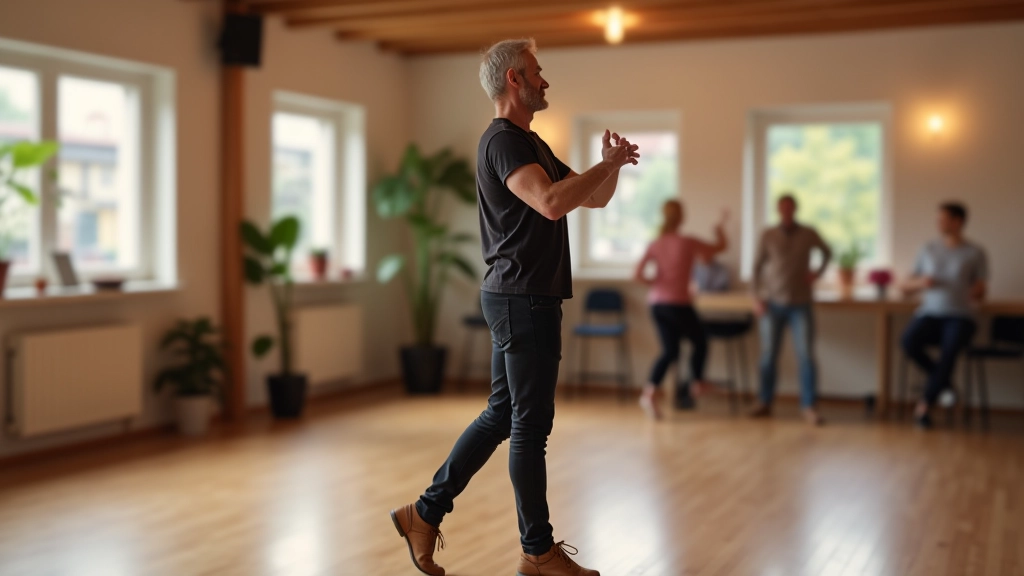
The instructor will spend the first 10-15 minutes on warm-up and basic footwork with the whole group. No partner yet. You're just learning the step in place, getting your body used to the rhythm. Around 20-30 minutes in, you'll partner up. The instructor will teach a short combination — maybe 8-16 counts — then you'll practice it repeatedly with your partner. By the end of class, you might've learned 2-3 short combinations. That's it. That's a good first session.
Wear comfortable shoes you can pivot in. Don't come in heavy boots or sneakers with sticky soles — you need something that lets your feet move. Classes run about 60-90 minutes depending on the level.
We've worked with hundreds of beginners. Here's what actually helps:
Spend a week listening to salsa music before your first class. Get familiar with the rhythm. YouTube has playlists — salsa clásico works best for beginners. You don't need to understand it, just let your ear adjust.
The basic step isn't hard, but repetition makes it automatic. Spend 10 minutes a day, 4-5 days a week, just doing the step in your living room. By the time you hit class, your feet will know what to do.
If possible, bring a friend to your first class. Not to partner with — actually, you won't — but just to have someone in the room who's also new. It makes you feel less alone.
Give it a real try. One class won't do it. Four weeks — that's 8-12 sessions if you're going twice a week — is when things start clicking. You'll feel the rhythm in your body by then.
Your partner's probably nervous too, even if they've been dancing longer. Don't apologize every time you mess up. Just reset and go again. That's what everyone does.
Our instructors in Liepāja expect questions. "Am I supposed to lead or follow?" "Is this turn right?" Ask. Everyone in that room asked the same things.
We get this question constantly: "How is salsa different from bachata?" They're both Latin dances, but they're genuinely different experiences. Bachata is romantic, slow, and close. You're dancing as one unit, and there's a lot of body contact. Salsa is energetic, fast, and open. You've got space, and the connection is mainly in your hands and frame.
Musically, bachata's built on a 4-beat pattern with an emphasis on beats 4 and 8. Salsa uses an 8-beat measure but the emphasis is on beat 1 and beat 5 — the "clave" rhythm. That's why salsa feels quicker. Tempo-wise, bachata typically runs 100-130 bpm, while salsa ranges from 92-110 bpm. Wait, isn't salsa slower? Yes, technically, but it feels faster because you're moving more steps per measure.
The footwork in salsa covers more floor. You're traveling across the dance floor, doing turns and spins. Bachata keeps you mostly in one spot. Both are great. They're just different flavors of partner dancing.
Salsa fundamentals aren't mysterious. It's a learnable skill that takes time, repetition, and a little bit of courage. The good news is that Liepāja's got a solid community of people learning right alongside you. Classes run regularly throughout the week, and instructors here are patient with beginners. You're not going to be the oldest person in the room, and you're definitely not going to be the most nervous.
The basic step is your foundation. Once that's solid, everything else — turns, style, musicality — builds naturally. Most people don't realize they're making progress until about six weeks in, when suddenly they're leading a turn or following a complex pattern without thinking about their feet. That's the moment when salsa stops being work and starts being fun.
Explore other resources about dance events and classes available in Latvia, or get in touch with questions about getting started.